July 30, 2026
How to Light a Garden Without Making It Look Too Bright
There's a certain kind of garden that stops you in your tracks after dark, not because it's dazzling, but because it's soft. A few trees glowing gently from below, a pathway you can just about make out, and a seating corner that looks like it's holding its own quiet pool of light. That's the garden everyone wants. And yet, so many end up looking more like a showroom than a garden, simply because the lighting tries too hard.
Here's how to avoid that, without getting too technical about it.
The Mistake Most People Make First
Almost everyone starts the same way they think about "lighting the garden" as one single job, like flipping a switch and having the whole space lit evenly. But a garden isn't a room. It has depth, texture, and quiet corners that are meant to stay quiet. The moment you try to light everything equally, it starts looking flat, and worse, it starts looking bright in a way that feels artificial rather than magical.
The better starting point is to ask a different question: not "how do I light this garden," but "what in this garden deserves to be seen after dark?" Maybe it's an old tree, a cluster of plants near the entrance, or a small sitting area tucked in the corner. Once you know what you're highlighting, the rest of the garden is allowed to fall into soft shadow, and that contrast is exactly what makes a space feel designed rather than just switched on.
Why Warm Light Feels Like Home
If there's one small decision that changes everything, it's the colour of the light itself. Cool white light the kind you often see in office buildings or under bright showroom displays tends to feel harsh outdoors. It flattens greenery and makes gardens look almost sterile, like the plants are on display rather than growing naturally.
Warm light does the opposite. It sinks into the leaves, softens stone pathways, and makes water features glow rather than glare. It's closer to candlelight or moonlight than daylight, and that's exactly the feeling most gardens are going for in the evening calm, not clinical.
Less Wattage, More Feeling
There's a tendency to think brighter automatically means better, especially once the fixtures are actually being chosen. But gardens rarely need much wattage at all. In fact, most spaces feel more beautiful when the lighting is gentle enough that you have to pause for a second to let your eyes adjust rather than being lit up the moment you step outside.
A good rule worth remembering: if a light feels slightly too strong when you first switch it on, it will almost always feel too strong once it's installed permanently. It's far easier to add a touch more brightness later than to soften something that was too intense from the start.
Let the Light Sit at Different Heights
One big source of light trying to do everything is usually what makes a garden look one-dimensional. A softer, more layered approach works far better a few low path lights near the ground, a gentle uplight tucked at the base of a tree, maybe a warm glow near where people sit in the evening.
When light comes from different heights and directions instead of one dominant source, the whole space feels more natural, almost like it's lit by something ambient rather than something installed.
Why Some Corners Should Stay Dim
This is the part people find hardest to accept a garden doesn't need every corner lit to look good. In fact, the opposite is often true. Leaving a few areas in gentle shadow gives the lit areas somewhere to stand out. Without that contrast, everything blends into the same flat brightness, and the sense of depth disappears entirely.
Think about how uneven candlelight feels in a room compared to a fully lit ceiling fixture one feels intimate, the other feels functional. Gardens work the same way.
A Practical Checklist
• Angle lights downward or sideways rather than letting them shoot upward into open sky it keeps glare down and avoids spilling light into a neighbour's space.
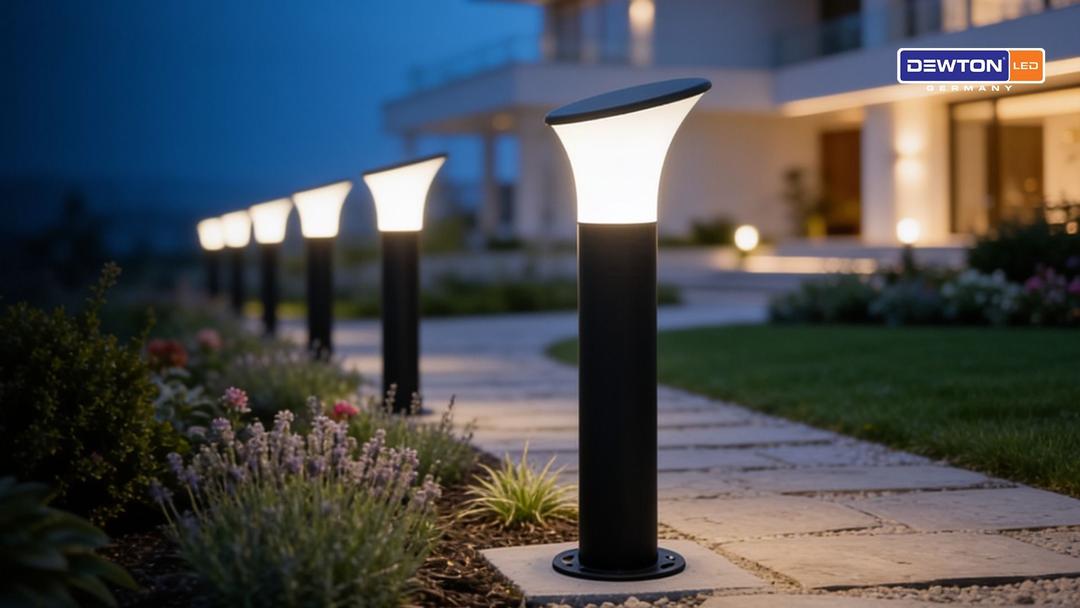
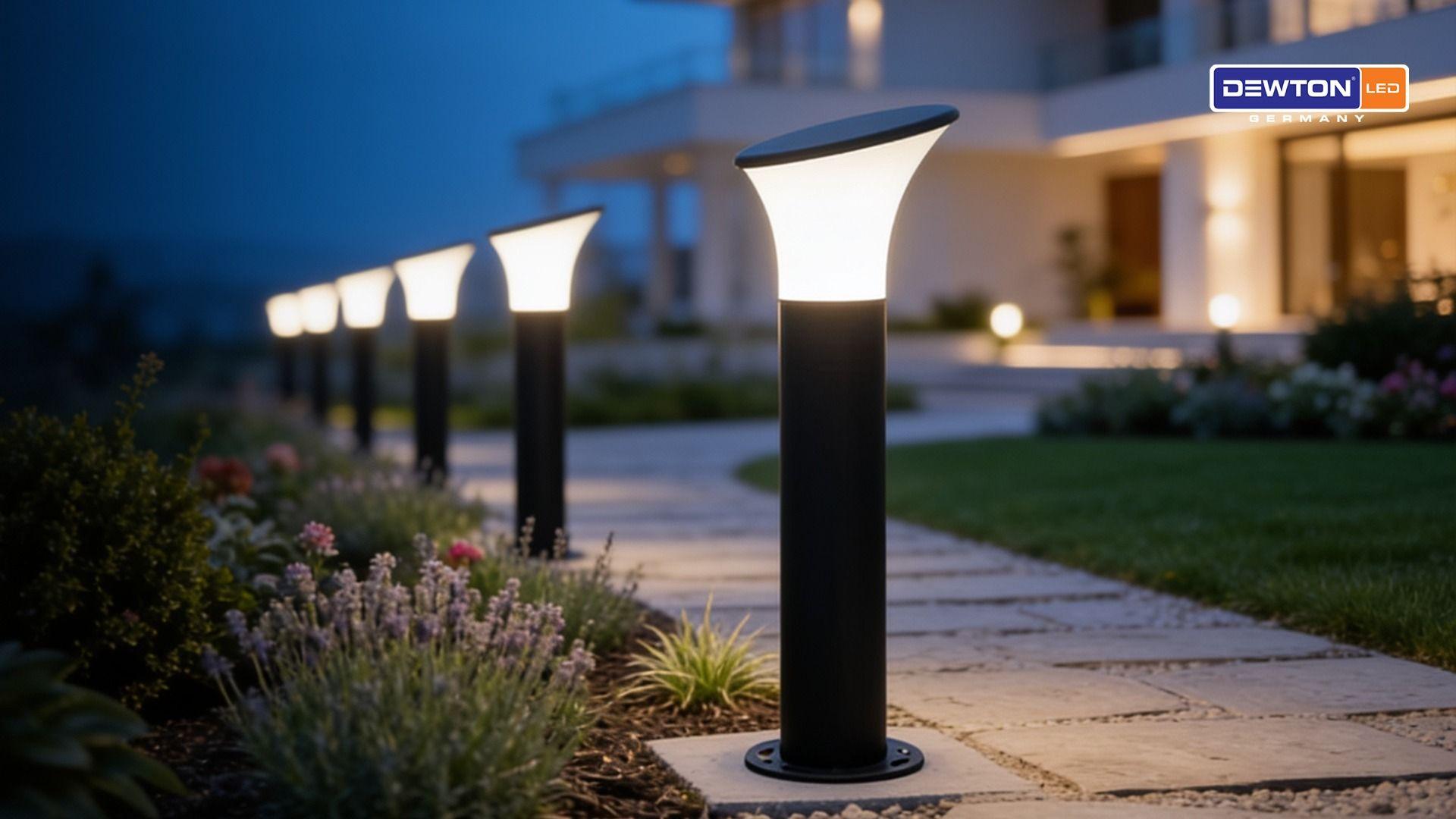
• Keep pathway lighting low and spaced out, just enough to guide footsteps safely, without turning the walkway into the brightest part of the garden.
• Add dimmers or separate circuits where possible, so a quiet weekday evening and a small weekend gathering don't need to look identical.
• Do a night-time walk-through before finalizing anything lighting always feels different once it's actually dark outside, no matter how good it looked on a plan or spec sheet.
Getting it Right, Right from the Start
You could just buy some lights, put them wherever, and hope it looks good. Or someone could actually walk through your garden first see which tree deserves a soft glow, which corner should stay dark, where the path needs just a little light to be safe. That difference is what makes a garden look truly beautiful at night, not just lit up.
This is the kind of care Dewton LED brings to garden lighting in Kerala. Instead of using the same setup for every space, the focus is on understanding what each garden really needs its plants, its weather, its quiet spots and planning the lighting around that. So, if you have a garden that could feel more special in the evenings a small balcony, a villa lawn, or a rooftop garden the best step is not to just pick out lights. It's to talk to someone who will walk through your space with you first.